EDITOR’S NOTE

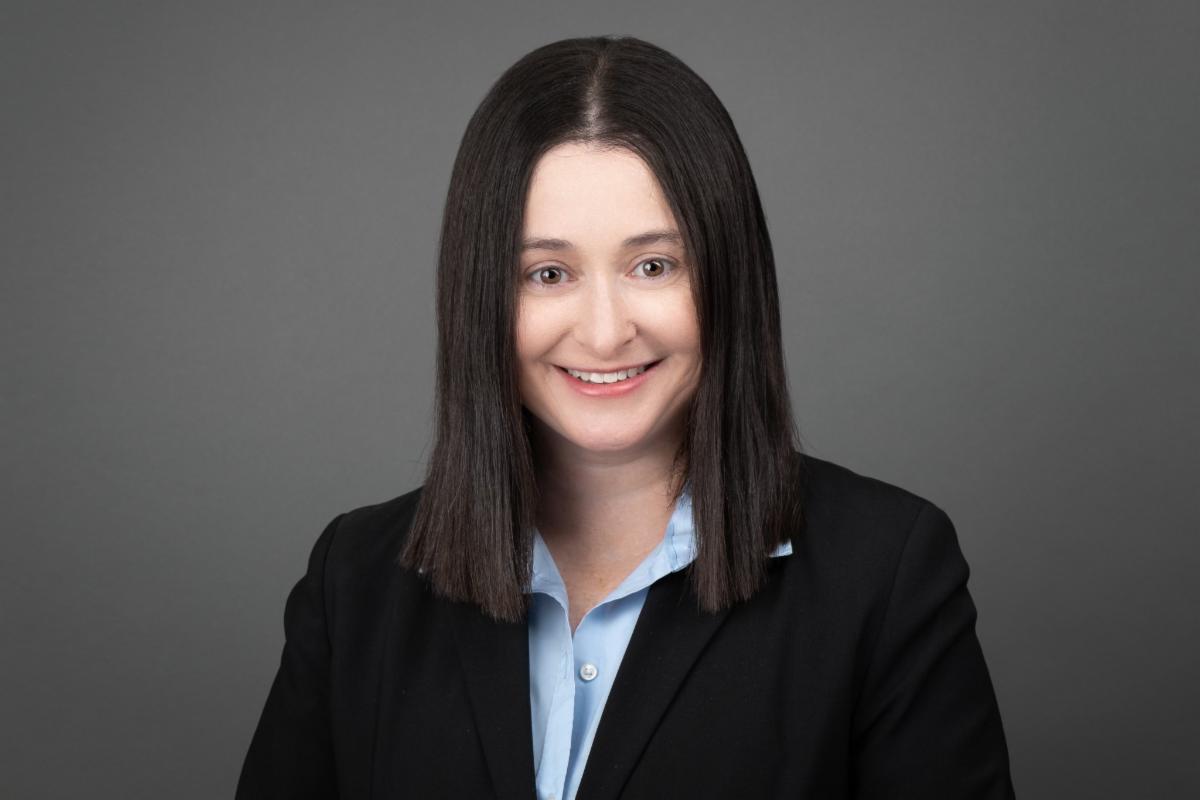
By Helen Colby, PhD, Editor-In-Chief

I am very pleased to be taking over as the editor of the SMDM newsletter. I want to start by thanking outgoing editor Ellen Engelhardt and outgoing deputy editor Aisha Langford for all their excellent work on the newsletter over the last four years.


As I move into the editor’s seat I hope to bolster SMDM’s position as an international society, and starting in the next newsletter will highlight work being done by our international members or members doing collaborative work across borders to help foster more transnational and cross-cultural research partnerships. If you have suggestions for work we should feature, either your own or someone else’s, please let me know at hcolby@iu.edu.


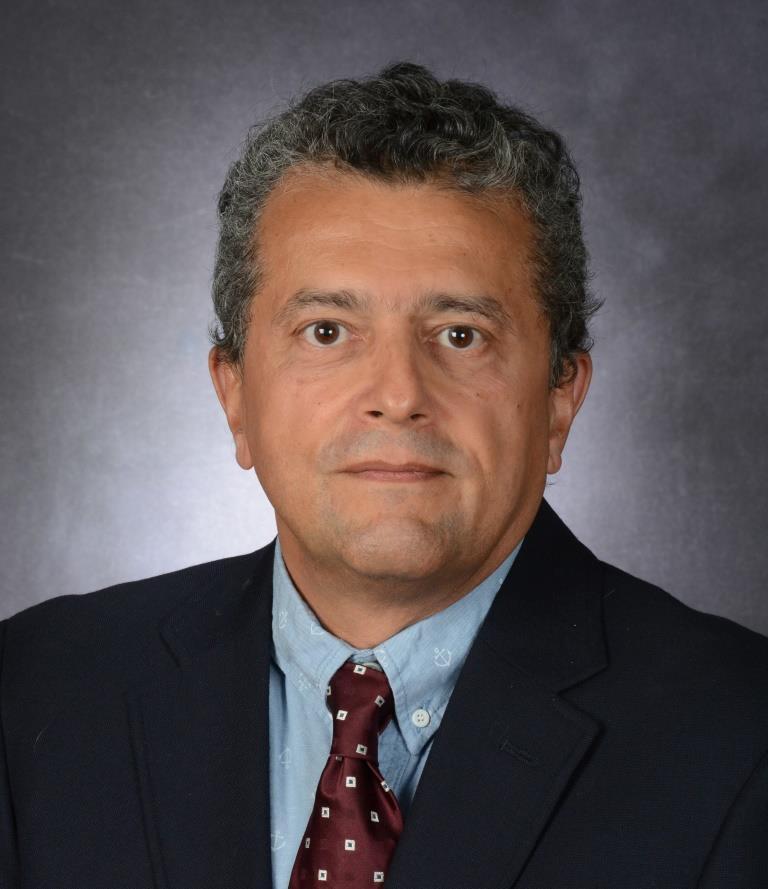
In sad news, Mike Kattan passed away earlier this month, and you can find a tribute to him in this issue. Our deepest sympathies to his loved ones. He will be missed.


In happier news, the annual conference in Boston is just around the corner and I look forward to seeing many of you there; it promises to be an excellent time. Please say hello and share any ideas you have for upcoming newsletters.


Also, please fill out the social media survey by Jenny Sinclair and Alistair Thorpe to share your content and social media preferences, it should take less than a minute!


Other items of interest in this edition of the newsletter include:


·      Outgoing SMDM president Alan Schwartz introduces the incoming SMDM leadership, and provides an interesting discussion of Gomez v. Sauerwein, a case that touches on whether physicians should be required to inform patients of every positive test result, even ones believed to be false positives.


·      Victoria Shaffer, SMDM president-elect, provides important information about the Lusted prizes for outstanding student presentations that will be awarded at the upcoming annual meeting. Marilyn Schapira provides information about how members can support the Lusted and other SMDM awards.


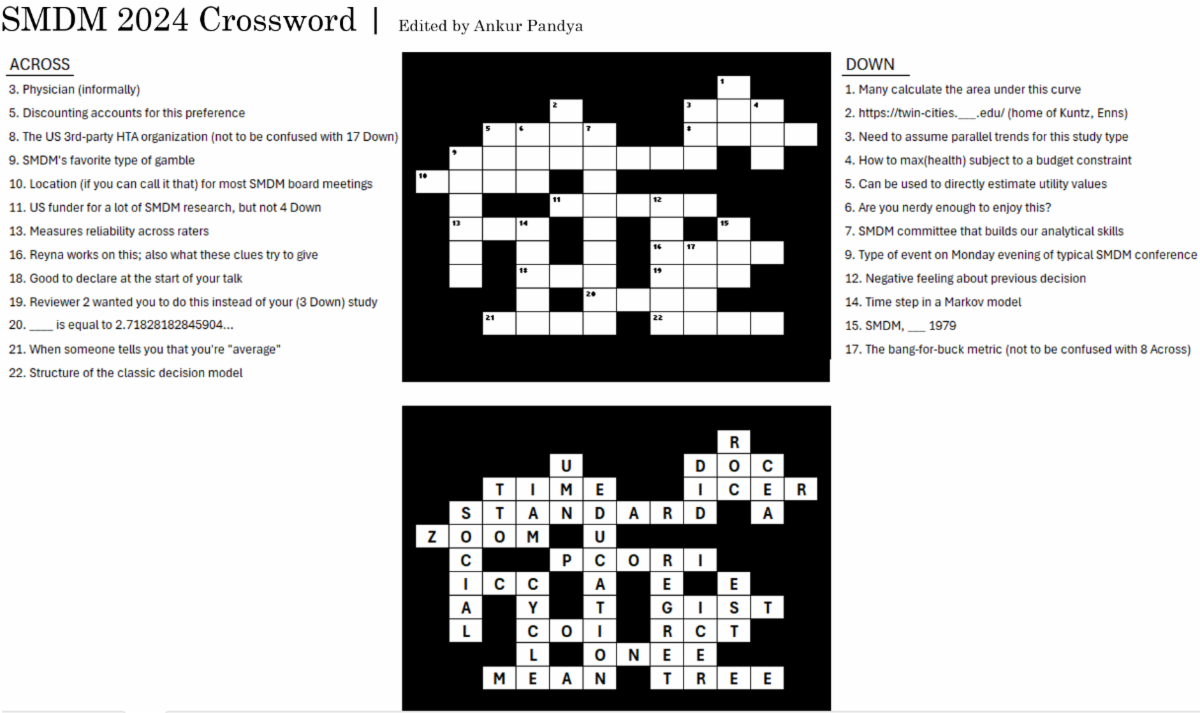
·      If you did the excellent crossword provided by Ankur Pandya in the last newsletter, you can find the answers in this edition, and if you didn’t I suggest you go back in the archives and give it a try!


·      Ankur Pandya also provides the highlights we can look forward to at the 2024 Boston Annual Meeting, and Ellen Kim DeLuca shares information about an excellent lunch symposium being held during the meeting designed to help decision scientists better engage stakeholders in their research.


·      Brian Zikmund-Fisher encourages participants interested in publishing in one of the SMDM journals to schedule a one-on-one meeting with the editors during the annual meeting, and he and David Hutton look forward to what we can expect at next year’s Annual Meeting in Ann Arbor. 

FROM THE PRESIDENT

By Alan Schwartz, PhD, President

It’s hard to believe that this is my last President’s column. You may be familiar with the

parenting adage “the days are long but the years are short”. I’ve learned it applies to being

SMDM president too (along with the deep feelings of gratitude for the experience and

inadequacy in delivering everything you deserve).


With the Boston meeting rapidly approaching, my thoughts also turn to the recent loss

of Mike Kattan, with whom I and other members shared a warm and stimulating discussion

around the bar last year in Philadelphia. My thoughts of Mike and SMDM are always about his

deep commitment to the Society and the interests of decision science researchers and trainees. His passionate dedication shone in the hard work of the comprehensive and groundbreaking Encyclopedia of Medical Decision Making. The Society recognized his contributions through the Award for Distinguished Service in 2008, the John M. Eisenberg Award for Practical Application of Medical Decision Making Research in 2013, and the Career Achievement Award in 2022. He is the only person to have received all three awards. I will certainly miss him in Boston and the years to come.


The SMDM newsletter welcomes personal tributes to recently deceased members, and can publish more than one. The journal Medical Decision Making will also consider submissions of in memoriam papers that summarize and speak to the contribution of the individual to the field of medical decision making. The journal will generally publish not more than one article, however that article can have several authors.


On a happier note, please join me in extending congratulations to the newly elected

SMDM officers and trustees. The Society is in excellent hands for the upcoming years, and I’m excited to get to work with this outstanding group.

See our New Leadership

LEE LUSTED PRIZE COMPETITION

By Victoria Shaffer, PhD, President-Elect

The Lee B. Lusted Prizes are awarded for outstanding student presentations at the Annual Meeting. The competition is named after Dr. Lee B. Lusted who helped to advance the field of medical decision making, was a founding member of the Society in 1979, and was the first editor of the Journal of Medical Decision Making. A total of ten awards are given each year, with two awards in each of the five SMDM scientific areas of interest:


1) Decision Psychology & Shared Decision Making (DEC)

2) Applied Health Economics (AHE)

3) Patient and Stakeholder Preferences and Engagement (PSPE)

4) Health Services Outcomes and Policy (HSOP)

5) Quantitative Methods and Theoretical Developments (QMTD)


To be eligible for the Lusted Student Prize Competition, the first author on the abstract must be either be enrolled in a degree granting program or be a resident in a clinical training

program at the time of abstract submission. For the 2024 Annual Meeting, there were 114 abstracts submitted for consideration in the Lusted Student Prize competition. Finalists were selected on the basis of the scores that their abstract received from the Scientific Review Committee. For a summary of our abstract review process, please see the article I wrote for the March 2024 newsletter. Up to ten finalists are selected from each of the five categories; however, candidates are only permitted to present one abstract for the competition.


The 2024 Lusted Co-Chairs—Dr. Kathryn Martinez and Dr. John Giardina—selected 46 finalists for presentation at this year’s annual meeting. The finalists will preview their work for meeting attendees via a 30-second “elevator pitch” on Monday 28 October at 11 AM. This year, we have chosen to elevate the visibility of the Lusted Prize Competition by having a special, stand-alone session where the finalists can present their work on Tuesday 29 October at 1:30 PM. At this special session, the finalists will prepare a poster and have a 10-minute time slot where they will give a short, oral presentation of their poster to the Lusted judges. All meeting attendees are invited to the special session to watch the presentation to the judges and/or speak to the finalists at their poster before or after their presentation.


The ten winners of the Lusted Prizes are selected on the basis of their scores from the judges. The Lusted judges provide two sets of scores, which are combined to create the final scores. The first set of scores that the judges provide are the pre-scores. Judges are sent copies of all the finalists’ posters in their judging category before the conference, and they provide ratings for each poster on Scientific Merit and Visual Presentation. Judges then attend the Lusted Finalist presentations and provide a second set of ratings on Scientific Merit, Oral Presentation, and Responses to Questions for a subset of the finalists in their judging category based on their in-person presentation. After the Lusted Finalist presentations, the Lusted Co-Chairs combine the two sets of judges scores and determine the competition winners. This year, the awards will be given out during the Early Career Awards Presentation on Wednesday 30 October at 9:30 AM.


The Lusted Prize Competition is one of the highlights of our annual meeting. Please attend their elevator pitches and note the finalists that you would like to visit during their presentation session! I look forward to seeing everyone in October.

SOCIAL MEDIA POLL

By Jenny Sinclair & Alistair Thorpe, SMDM Digital Communications Committee Chairs

Dear fellow members,


We value your membership and are working towards a new strategy that will provide you with the most relevant and timely information. It will take less than a minute to complete this brief survey to help us understand your social media use and content preferences from SMDM.

Complete survey

SMDM’S PRESIDENT ON MDM AND THE LAW

By Alan Schwartz, PhD, President

For the final installment of my MDM law topics, I look at a Washington state case that speaks to the difference between diagnosis and decision and what kind of risks providers don’t need to inform patients about. As is typical when lawsuits are filed, the story is a sad one. A patient with diabetes visited her doctor for UTI symptoms. A few days later, a preliminary result from a blood culture was positive for yeast, a serious finding. A nurse called to check on the patient, who reported that she was feeling much better. As a result, the doctor concluded that the culture result was a false positive. He moved up her appointment to the following week, but did not tell her about the culture result. Two days later, the lab identified candida glabrata in the culture, but did not notify anyone. The patient was eventually treated with an appropriate antifungal, but the infection spread and she died. Her estate sued the doctor and clinic for malpractice but also for failure to obtain informed consent.


The case reached the Washington State Supreme Court and was decided in 2014 under the name Gomez v. Sauerwein. In its opinion, it held that “a health care provider who believes the patient does not have a particular disease cannot be expected to inform the patient about the unknown disease or possible treatments for it.” There is no duty, the court reasoned, to inform patients of all positive test results, because a lab test is only a tool that providers may use to form a diagnosis, and it is the diagnosis of which the patient must be informed. It is wasteful for patients and providers to wade through treatments for a ruled out diagnosis (even if wrongly ruled out). There may be malpractice, but not a failure to inform.


Should doctors be required to inform patients of the evidence (like test results) they weigh in basing their diagnosis, even when they discount it? Meet me in Boston and let me know what you think!


Thank you all for you continued support of the Society!

IN MEMORIAM:

Mike Kattan

By: Andrew Vickers, PhD


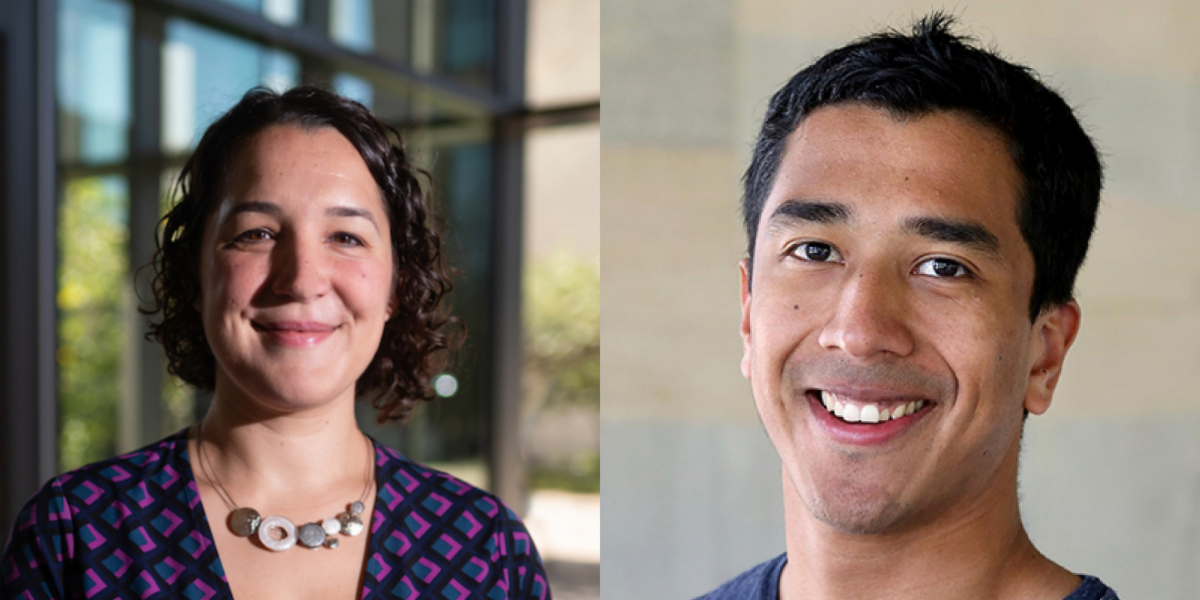
I met Mike Kattan (pictured above) soon after joining Memorial Sloan Kettering Cancer Center. It was immediately clear that we had a shared view of statistics as a means to an end of helping doctors and patients make better decisions: he had a hammer, but instead of looking for nails, he was thinking about what to build, and whether and how the hammer could be useful. This no doubt stemmed from Mike’s personal experience as a cancer patient, and his resulting decision to switch careers to medical research. Mike was always welcoming and generous with his time. I had originally focused on clinical trials and had little experience of prediction modeling, but he was always willing to share his knowledge, no matter that I was still on the baby steps. Some of our initial conversations led to a co-authored paper developing new ideas about how to evaluate prediction models, a line of research that ended up with the development of decision curve analysis, a great example of how, like many great researchers, many of Mike’s contributions are unseen, the result of encouraging others to do their best work. Mike and I continued to collaborate until shortly before his untimely passing: not untypically, he spotted a flaw in a prediction model I was developing, a flaw that had less to do with math than with thinking through the clinical scenario and how doctors and patients would make a decision. I will miss Mike as a colleague, sure, but mainly as a friend.

DIVE DEEP INTO THE FUTURE OF

MEDICAL DECISION MAKING:

SMDM 2024’S COMPREHENSIVE PROGRAM*

By Ankur Pandya, PhD, Local Organizing Committee Chair

with Amber Barnato, MD, MPH, Ms and Jagpreet Chhatwal, PhD, 46th Annual Meeting Co-Chairs

From 27-30 October 2024, in Boston, MA, the Society for Medical Decision Making (SMDM) will host its 46th Annual Meeting, a gathering renowned for its depth and breadth in exploring the frontiers of medical decision-making. From cutting-edge research presentations to in-depth workshops, this year’s conference promises a robust program designed to expand your research toolkit, translate concepts to practice, and deepen your professional network.


With over 50 sessions spread across four days, attendees will have access to a wide array of topics. For those interested in the technological evolution of healthcare, sessions like “Generative AI for Decision Modeling in Healthcare” and “Artificial Intelligence and Machine Learning in Clinical Practice” will offer a deep dive into how AI is transforming the field. These sessions are perfect for professionals eager to stay ahead of the curve in the rapidly evolving landscape of healthcare technology.


The program also features rigorous discussions on the translation of decision science methods into policy and clinical practice. For instance, the session on “Value of Decision-Analytic and Machine Learning Tools in Clinical Practice, Guidelines, and Health Technology Assessment” will showcase how these tools are being used to improve patient outcomes and streamline clinical workflows.


Further highlighting the conference’s diversity are sessions such as “Decision Sciences and Marginalized Communities” and “Race, Culture, and Worldviews”. These sessions will explore the intersection of decision science with cultural and societal influences, offering insights into how diverse populations navigate health decisions and the impact of these decisions on health outcomes.


Over 300 abstracts will be presented, representing the latest advancements and innovations in medical decision-making. From talented trainees to international experts, SMDM attendees will have ample opportunities to learn from and network with the brightest minds in the field.


Don’t miss out on this unparalleled opportunity to deepen your understanding of medical decision-making. Register today for SMDM 2024 and take the next step in your professional journey.

———————————————————————


*Initial draft created by ChatGPT on 16 August 2024 in response to the prompt “Write a couple of feature articles for an E news template. The Articles should focus on highlighting the importance of attending and encourage registration for the society for medical decision making Conference in October. Conference details below as well as evaluate the attached program for sessions and speakers to highlight. Ensure one of the Articles speaks to the diversity of the program and another article speaks to the depth of the topics and gives a rundown of the stats of the program” and an uploaded version of the SMDM Annual Meeting Agenda as background material, then edited for style and content by Ankur Pandya, PhD.

Register Today

PULLING OFF PRACTICAL AND PRODUCTIVE PARTNERSHIPS:

Guidance for Decision Scientists

By: Ellen Kim DeLuca, PhD, MPH


We are excited to announce that SMDM’s Patient Advisory Council (PAC) and Career Development Committee (CDC) will be co-hosting a luncheon symposium at the 46th Annual Meeting in Boston, MA. Below is more information about the event and we hope you will be able to join us! 


Symposium title: Pulling off Practicable and Productive Partnerships: Guidance for Decision Scientists


Symposium date and time: 28 October 28 2024 from 12:30-1:55 PM ET 


Symposium description:

To increase the impact of their research, decision scientists should engage patients, clinicians, payers, policymakers, and other healthcare stakeholders as research partners. Stakeholder engagement is crucial for ensuring that research questions, designs, and the types of conclusions that those designs can support, are patient-centered and policy-relevant, producing findings that are both meaningful to patients and meet decision-makers’ needs. This symposium provides an opportunity for decision scientists to learn about principles of research co-design and strategies to facilitate collaboration with various types of research partners. Panelists who represent patient, clinician, research funder, and policy stakeholders will share their experiences participating in 3 research phases: 1) designing the study, 2) conducting the study, and 3) disseminating study results. In moderated discussion, panelists will discuss key takeaways from their experiences and suggestions for optimizing collaborative processes, fully engaging partners at each step of the decision science research process. The conversation will provide an open exchange of insights and lessons learned.


Symposium speakers:


Frank Gavin

Ellen Lipstein, MD, MPH

John B. Wong, MD, MACP

Sen. Robin Wright-Jones

47th Annual Meeting

15-18 June 2025 in Ann Arbor, MI, USA

By David W. Hutton, PhD and Brian Zikmund-Fisher, PhD


It seems weird to be talking about the 2025 SMDM meeting when we haven’t had our 2024 meeting yet. We don’t want to distract from anyone’s preparations for Boston, and we’re looking forward to seeing some great science and many of you there!


But, as co-Chairs of the 2025 Annual Meeting, we have some exciting news to share about what we’re planning for the Ann Arbor meeting (which, as a reminder, will be held on 15-18 June 2025 rather than in October).


First, be on the lookout for our call for abstract submissions and short course proposals, which will go out to you in early November with a submission deadline for early January 2025. Yes, we know it’s a short turnaround, which is why we’re letting you know the timing well in advance.


Second, we want to announce that we’ll be devoting the entire morning half-day on Wednesday (18 June 2025) to special sessions designed to support cross-talk between SMDM and clinicians. These sessions will both be designed to encourage “big picture” reflection by SMDM members (clinicians and social scientists alike) on the core ideas of our field and hopefully be made available both in-person and via streaming to broader clinician audiences. As a result, we will also be having a new type of call for participants (to be released at the same time as the call for abstracts and short courses) in which individual members can propose to participate in these themed sessions on that day. While details are still being worked out, we hope to have “save the date” information that you can pass on to clinician colleagues soon.


Beyond that, we’re workshopping our ideas for how the conference will be laid out in the beautiful Michigan Union building, planning the social event to be held at the Big House (Michigan Stadium), and assembling lists of great restaurants to consider for Dinners with Experts. 


So, let’s all enjoy getting together in Boston AND start building excitement for June in Ann Arbor in 2025! 

DONATIONS ACCEPTED

By Marilyn Schapira, MD, MPH; SMDM Development Committee Chair


SMDM Early Career Awards: Please donate!


SMDM bestows several awards each year during our Annual Meeting, some of which encourage early career development and recognition. Currently, there are three awards you can help support recognizing Lee B. Lusted, Sandy Schwartz and Murray Krahn, three amazing SMDM leaders we lost too soon. We hope you will consider donating in their memories to help continue their impact on the field.


The Lee B. Lusted Student Prizes are awarded for outstanding student posters at the Annual Meeting. The competition is named after Dr. Lee B. Lusted, a leader in advancing medical decision making as a field, founding member of the Society in 1979, and the first editor of the Journal of Medical Decision Making. This is an exciting competition held onsite during the Annual Meeting since 1999, offering the recipients free registration to the next SMDM Annual Meeting and a stipend.


A new award just created by the SMDM Board of Trustees in 2023 is The SMDM Young Scholars Award honoring different SMDM members who have contributed greatly to the field and society. This Award recognizes a promising Scholar who is new to or early in their career in the field of Medical Decision Making but has the potential for impact and leadership in the field and in the Society. It supports the early career development of a young Scholar through attendance at an SMDM annual meeting, making connections to trainees and scholars in our field, and providing research mentorship.


In 2024, we will be presenting three SMDM Young Scholar Awards. Two of the Awards will be for the SMDM Young Scholars Award in Health Policy presented in honor of Sandy Schwartz recognizing Sandy for his commitment to mentorship in the field of health policy and his support of young scholars in the Society for Medical Decision Making. We will also grant one SMDM International Young Scholars Award presented in honor of Murray Krahn recognizing his commitment to mentorship and international collaboration in the field of Health Technology Assessment and his support of young international scholars in the Society. Preference is given to nominees who engage in international collaboration and/or reside in a low- or middle-income country).


To help support one or all of these awards, please donate below. No amount is too small, and your contribution will help us memorialize the contributions made by Lee Lusted, Sandy Schwartz and Murray Krahn.

Donate Here

New Group Membership

We’re excited to introduce our new Group Membership option, designed to offer greater value to groups joining SMDM. Our hope is that this Group Membership allows more members to be able to have their institution invest in SMDM membership.


This tiered discount program allows for a mix of membership types, including trainees, faculty, and emeritus members. The group may be from multiple institutions.


Joining as a group unlocks exclusive discounts:

  • 2-4 members: 3% discount per member
  • 5-10 members: 5% discount per member
  • 10+ members: 10% discount per member

This flexible structure aims to accommodate diverse organizational needs while providing substantial savings for larger groups. Follow these steps to complete a Group Membership.

  1. Designate a group administrator to manage your membership.
  2. Fill out a group membership form.
  3. List all members and their membership types (e.g., trainee, faculty, emeritus).
  4. Complete payment in a single group transaction.

Apply now to maximize your benefits and streamline your organization’s membership process!

MDM JOURNAL NEWS: TALK WITH THE EDITORS, CHANGES TO DISCLOSURES IN MANUSCRIPTS

By Brian Zikmund-Fisher, PhD, Editor-in-Chief


Talk with the Editors!


Both Deputy Editor Lauren Cipriano and I really look forward to talking with prospective authors, either at our ongoing Editors and Abstracts Hours (held once a month by Zoom) or at 1:1 in person meetings at the upcoming SMDM meeting in Boston. We’d much rather have a short but productive conversation with authors before submission than to have to work out scientific design, journal scope, or formatting issues through multiple rounds of manuscript revision.


Editors and Abstracts Hours: Dates, times, and Zoom link information is always available at https://www.journals.smdm.org/editors-and-abstracts/ . Reservations are not required, but please drop us a note at mdm-journal@umich.edu if you are planning to join us. The next planned dates for Editors and Abstract Hours will be on 12 September, 10 October, 14 November, and 12 December 2024.


1:1 Meetings at SMDM2024 in Boston: Lauren and I will have 10 minute timeslots for 1:1 conversations available at different times during the Boston meeting. While exact timeslots will be announced later, please be on the lookout for messages about how and when to sign up both before the meeting and through the meeting app. 


Changes to Disclosure Formatting in Manuscripts


There is an increasing movement within academic publishing to standardize how key disclosures (e.g., funding, conflicts of interest, ethical considerations, participant consent, data sharing) are presented in journal articles. After some discussion about this issue with our publisher, Sage, we have decided to transition the recommended format for articles to place this type of information in what are termed “end statements,” which are placed after the manuscript text and before references.


Our journals’ manuscript requirements (https://www.journals.smdm.org/manuscript-requirements/) have now been revised to request that authors organize such information in a particular format and order within a separate “Statements and Declarations” document, which is separate from both the Title Page and the anonymized main manuscript file. We will be working with authors over the next months to help them make the transition to this new format.


Please note, however, that both Medical Decision Making and MDM Policy & Practice are format-free for initial submissions. While we encourage authors to use our manuscript formatting guidelines for initial submissions, authors may use any consistent academic formatting and style that incorporates the required manuscript elements (including anonymization and a structured abstract where required). Revised manuscripts, however, must conform to the journals’ formatting and style.

CROSSWORD PUZZLE ANSWERS

By Ankur Pandya, PhD

UPCOMING SMDM EVENTS

Registration for 2024 is open! Save the Dates for 2025!

UPCOMING VIRTUAL COURSES

Individual Simulation in Excel Using DICE

– 12 November 2024

08.00-12.00 (PST) | 11.00 – 15.00 (EDT) | 16.00 – 20.00 (UTC) | 17.00 – 21.00 (CET)

J. Jaime Caro, MDCM, FACP, FRCPCP

McGill University

Evidera

London School of Economics

United States

Jorgen Moller, MSc

Evidera

Saw Swee Hock School of Public Health, National University of Singapore

Sweden

Register Today

MEMBER NEWS

By Ewout Steyerberg, PhD at the Julius Center for Health Sciences and Primary Care

Happy to announce my transfer to another Dutch University Medical Center: the Julius Center for Health Sciences and Primary Care in Utrecht. I will be leading a group of over 500 epidemiologists, statisticians and other health scientists as a scientific manager, and hopefully be able to free sufficient time for research. The past 7 years I had the privilege to be chair of the Department of Biomedical Data Sciences in Leiden, which includes a research group specifically on Medical Decision Making, including Anne Stiggelbout and other great colleagues. In Utrecht I will focus more on biostatistics and my specific interests in prediction models, where new AI and machine learning approaches are promising and increasingly utilized. While I’m sorry to be leaving my alma mater Leiden, I look forward to new challenges.

https://twitter.com/MaartenvSmeden/status/1772221909364515037

Submit Member News for Issue 4 of 2024

JOB POSTINGS

Here are the most recent job opportunities since our last newsletter.

SMDM members can stay current on the newest opportunities in the Resources Section of SMDM Connect.


Health Systems Science Research Faculty – School of Medicine

Pasadena, California


Director of Outcomes Research – University of Cincinnati Dept. of Internal Medicine


Assistant Professor Department of Health Sciences at the University of Central Florida


Staff Associate II – Columbia University Medical Center


Twitter  Linkedin  


Editor-in-Chief

Helen Colby, PhD

Kelley School of Business Indianapolis


Society for Medical Decision Making | 136 Everett Road | Albany, NY 12205 US

Constant Contact